Your bath mat gets more foot traffic than almost anything else in the house. Wet feet land on it several times a day, it soaks up drips from the shower and it lives in the steamiest room you have. Washing it is easy once you know one thing: the right method depends on what the mat is made of, and on what is underneath it. A cotton mat and a memory foam mat with a latex back need quite different treatment. This guide walks you through each type so your mat comes out clean and keeps its shape.
- 01Check the care label first
- 02How to wash a bath mat in the washing machine
- 03Mats with a rubber or latex backing
- 04Memory foam bath mats
- 05Cotton, microfibre and chenille mats
- 06Drying your mat the Australian way
- 07How often should you wash a bath mat?
- 08Mats that should not go in the washing machine
- 09Frequently asked questions
Check the care label first
Flip the mat over before it goes anywhere near the washing machine. The label usually answers three questions: can it be machine washed, what is the maximum water temperature, and can it go in the dryer. If the label and a general guide disagree, go with the label. The maker knows how the backing and the fibres were joined.
No label? Treat it like a delicate: cold water, a gentle cycle and no tumble dryer. That is the safe default for any mat you know little about.
Quick care finder: pick the type of mat you have.
How to wash a bath mat in the washing machine
Most textile bath mats can be machine washed. This routine suits nearly all of them:
- Shake it out first. Take it outside or hold it over the bath and give it a good shake to get rid of hair, dust and sand. Your machine’s filter will thank you.
- Wash it alone or with similar items. A couple of towels in the same colour balance the drum. Skip heavy jeans or anything with zips that could snag the pile.
- Do not overload the drum. A mat holds a lot of water and gets heavy. It needs room to move to come out clean.
- Choose the temperature on the label. Cold or warm water suits most mats. Keep hot water for plain cotton, and only if the label allows it.
- Use a normal dose of mild detergent. Too much soap leaves a residue that makes the pile feel stiff. Leave out fabric softener on microfibre: it coats the fibres.
- Pick a gentle or normal cycle with a moderate spin.
Mats with a rubber or latex backing
The backing is usually the first part to wear out, and heat is what wears it out. Hot water and hot dryer air make rubber and latex brittle, and they start to crack and flake. Plenty of backed mats can go in the machine, but on a cold, gentle cycle and only if the label says so. Never put a rubber backed mat in the tumble dryer.
If the backing already crumbles when you touch it, washing will only make it worse. That is usually the sign it is time for a new mat.
Memory foam bath mats
A memory foam bath mat has a foam core under a soft cover. Some have a removable cover you can wash on its own, others have to be washed whole. Follow the label: many allow a cold, gentle machine wash, others ask for hand washing. Foam holds a lot of water, so squeeze it gently (never wring or twist it) and let it dry flat or over a rail until the core is completely dry.
Cotton, microfibre and chenille mats
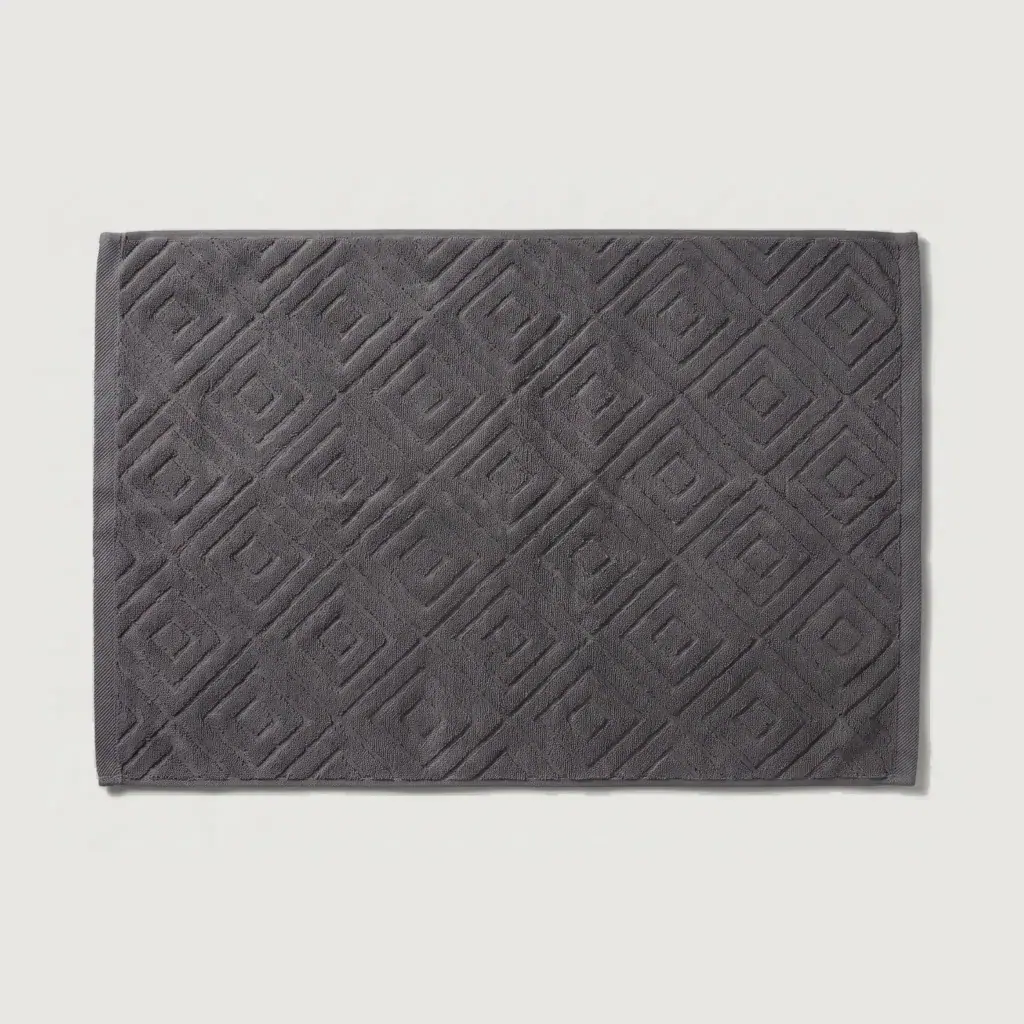
Cotton bath mats are the easiest to look after: they usually handle warm water and a normal cycle. Microfibre and chenille prefer cold or warm water and no fabric softener. After washing, give the pile a shake by hand so the loops stand up again before the mat dries.
Drying your mat the Australian way
The clothesline is your best friend. Hang the mat over the line or a drying rack in a spot with good airflow, backing facing out so both sides get air. A few practical points:
- Strong sun can fade bright colours over time. For a colourful or dark mat, a shady spot or a covered verandah is a better choice.
- Turn it once halfway through so the pile and the backing both dry.
- Only use the dryer if the label allows it, on low heat, and never for a rubber or latex backing.
- Make sure it is completely dry before you put it back on the floor.
How often should you wash a bath mat?
There is no single rule, but a simple rhythm works for most homes.
| Your bathroom | A good rhythm |
|---|---|
| One or two people, mat hung up after use | Every week or two |
| Busy family bathroom | Once a week |
| Small bathroom with little airflow | Once a week, and hang it over the bath edge between showers |
| Guest bathroom, rarely used | After each stay |
Between washes, hanging the mat over the edge of the bath or a towel rail after your shower lets it air out instead of sitting damp on the tiles. Having two mats and swapping them each wash day makes the routine even easier.
Mats that should not go in the washing machine
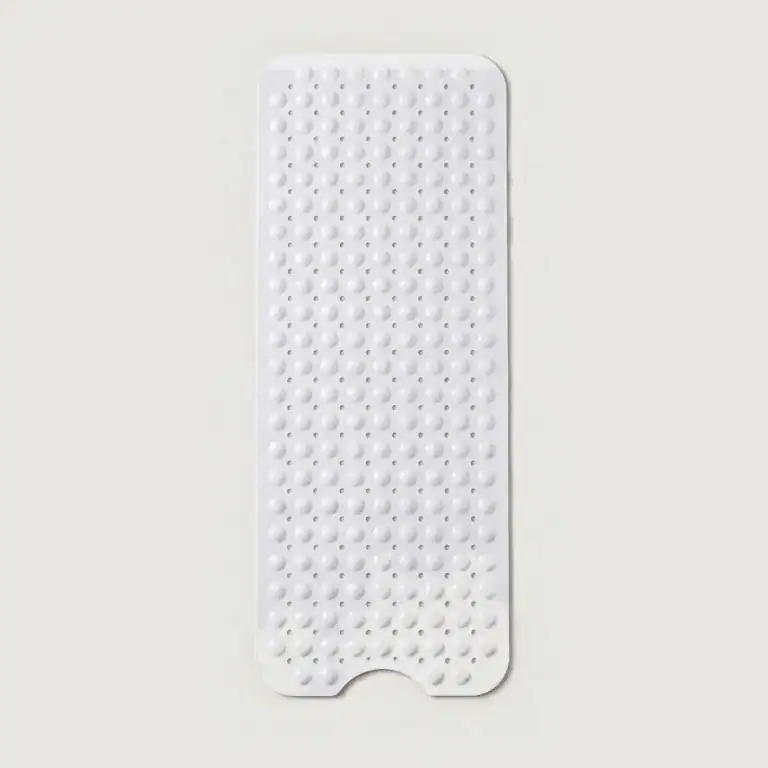
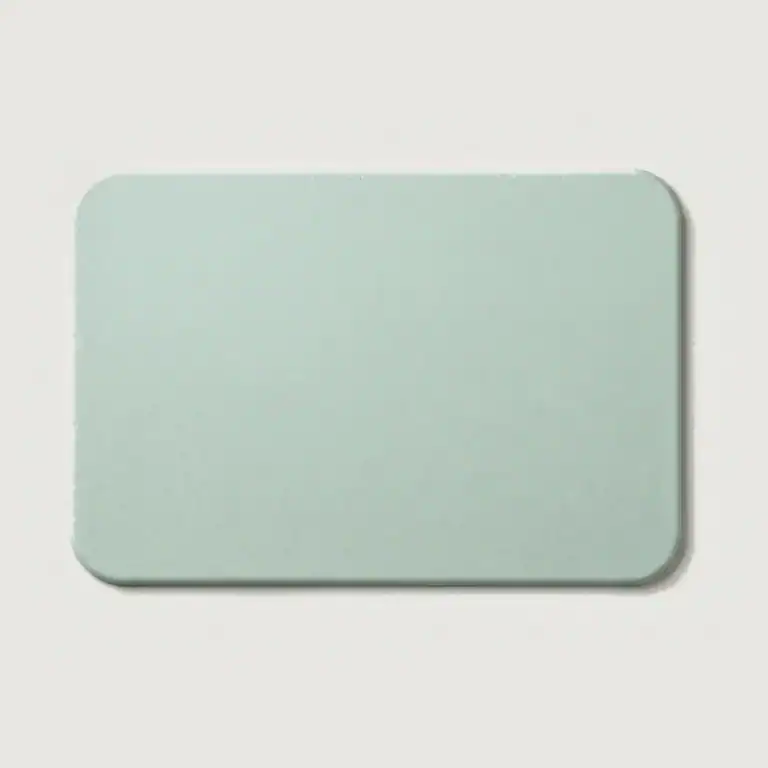
Some mats are not made for the drum at all. A rigid stone bath mat made of diatomite is rinsed and left to dry, then lightly sanded when needed: we explain it step by step in our guide on how to clean a stone bath mat. Bamboo and timber mats are wiped or rinsed and left to dry in the air. PVC mats for inside the bath or shower are washed by hand: see how to clean a bathtub mat.
Frequently asked questions
Can I wash my bath mat with towels?
Yes, as long as they are similar colours and the mat’s label allows the same temperature. Towels help balance the drum. Avoid washing a new, brightly coloured mat with light towels the first time.
Can I use bleach on a bath mat?
Only on plain white cotton, and only if the care label allows it. Bleach damages coloured fibres, microfibre and rubber or latex backings.
Why does my mat feel stiff after washing?
Usually too much detergent, or fabric softener on microfibre. Run an extra rinse cycle with no detergent, then shake the pile by hand before drying.
Can I put a bath mat in the dryer?
Only if the label says so, on low heat. Never with a rubber or latex backing: the heat damages it.
Looking for a new mat that suits your wash routine? Browse our bath mats or our bathroom rugs: each product page shows the material and sizes.

Practical guides to choosing and caring for your bath mats.